How Often Should You Book Professional Garden Maintenance?
Weekly, fortnightly, three-weekly or seasonal? Learn what determines a sensible professional garden-maintenance schedule around Farnham.
There is no single maintenance frequency that suits every garden. Weekly visits can be appropriate for a detailed formal garden in strong growth, while a smaller, more relaxed garden may work well with fortnightly or three-weekly care. The useful question is not simply “How often?” but “What condition and finish should the garden maintain between visits?”
A sensible schedule reflects garden size, planting, lawn area, season, growth rate, access and the amount the household wants to do itself. Around Farnham and nearby Surrey and Hampshire, spring and early summer often need more attention than midwinter, so the best arrangement may change through the year.
Weekly maintenance
Weekly visits suit gardens where presentation matters throughout the growing season, lawns need frequent mowing, borders are densely planted or there are many time-sensitive tasks. They also help while an overgrown garden is being brought back into order. Shorter intervals allow gardeners to remove smaller amounts of growth and respond quickly to weeds, flopping plants and fast-changing borders.
Weekly care does not mean every area receives equal attention every week. One visit might focus on lawns and edges; the next may prioritise beds, climbers or seasonal cutting back.
Fortnightly maintenance
Fortnightly care is a practical starting point for many established domestic gardens. It provides regular mowing and bed work without treating the garden as a formal display. It works best when the garden is already under reasonable control, the booked visit is long enough for the site and the desired finish is realistic.
During rapid spring growth, priorities may need to be tighter or occasional extra work may be useful. In dry spells, mowing may reduce while border care or plant-health checks become more important.
Every three or four weeks
Three-weekly or monthly visits can suit smaller gardens, low-maintenance planting and clients who do some mowing or watering themselves. They can also be useful in winter. The trade-off is that weeds, edges and fast-growing lawns have more time to change, so each visit may involve heavier work and fewer improvement tasks.
A monthly slot is not usually equivalent to four weekly visits compressed into one. Some jobs are most effective when repeated little and often. If the interval is extended, it helps to agree which tasks the client will cover between visits.
Seasonal and one-off visits
Not every garden needs a continuing programme. A spring tidy, autumn clearance, pre-event visit or winter structural tidy can be booked as defined work. One-off visits are best scoped clearly because a garden that has been unattended for months may need more than a standard maintenance session.
The factors that change frequency
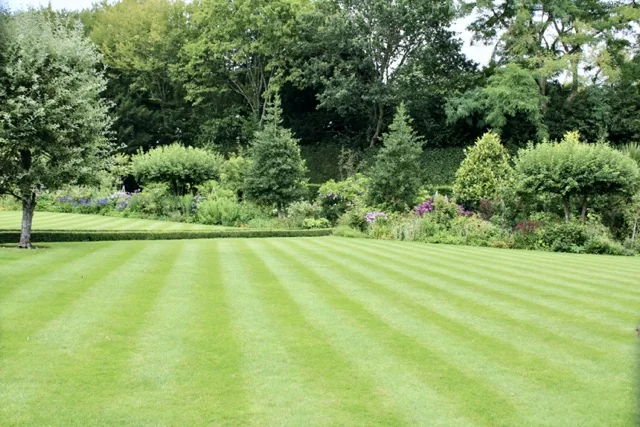
- Lawn area and finish: close, neat turf normally needs more frequent mowing than a relaxed or flower-rich lawn.
- Planting density: full borders bring deadheading, staking, cutting back and editing.
- Garden style: formal lines reveal missed visits sooner than naturalistic planting.
- Growth rate: fertile soil, rain and warmth can accelerate lawns, hedges and weeds.
- Garden condition: recovery work is slower than maintaining an established baseline.
- Client involvement: watering, light weeding and leaf collection between visits can extend the interval.
- Access and waste: difficult access and removal requirements affect how much can be achieved.
The RHS notes that a conventional lawn may need mowing weekly or fortnightly in spring and autumn depending on growth. That is a useful illustration of why the calendar alone should not dictate the work: grass, soil and weather need to be observed.
Start with an initial assessment
If the right frequency is unclear, begin with the garden rather than a rigid contract. An initial visit can establish condition and priorities. After two or three sessions, it is usually easier to judge whether the interval and duration are producing the expected finish.
Our garden maintenance page explains what can be included. If the lawn needs more than mowing, see lawn care in Farnham.
How the schedule changes through the seasons
From March into early summer, a two-week gap can produce a great deal of growth. Lawns may need frequent cuts, perennial supports must go in at the right moment, and young weeds are easier to remove before they establish. A weekly or fortnightly arrangement during this period can protect the baseline that was created over winter.
In midsummer, dry conditions may slow grass and make repeated close mowing undesirable. The focus may move to deadheading, careful pruning, checking new planting and keeping access clear. If the client is away, an agreed watering plan matters more than an extra cosmetic cut.
Autumn brings another active period. Lawns may be renovated when conditions suit, leaves must be kept from smothering turf and paths, and planting work can take priority. During winter, some gardens move to monthly visits while others keep a shorter interval because of leaves, evergreen structure, large sites or presentation needs.
Review the arrangement rather than guessing
A maintenance programme should be reviewed after the first month or two and again when the season changes. If every visit is consumed by mowing and clearance, the booked time may be too short for border improvement. If the garden remains controlled with time to spare, the interval might be extended or new priorities agreed.
Photographs taken from the same viewpoints can make the review more objective. Look at lawn edges, weed pressure, path access and how much unfinished work carries into the next visit. The aim is a dependable condition between visits, not the largest possible list on the day.
Questions to settle at the outset
- Which areas must look neat throughout the week?
- Which tasks will the household handle between visits?
- Is waste left on site, composted or removed by arrangement?
- Can the programme become more or less frequent by season?
- Which larger jobs need their own quotation?
- How should priorities be agreed when weather changes the plan?
Frequently asked questions
Is fortnightly maintenance enough?
Often, yes, for a reasonably controlled domestic garden. The answer depends on its size, planting and the finish you want between visits.
Can visits be less frequent in winter?
Many gardens can move to a longer interval, but leaf clearance, storm damage, access and suitable pruning may still require attention.
Can the schedule change during the year?
Yes. A seasonal schedule is often more useful than forcing the same frequency through periods of very different growth.
Discuss a realistic programme
Request a garden visit to discuss the garden, the work you want to retain yourself and a sensible frequency. Submitting the form is an enquiry, not a confirmed appointment or quotation.