
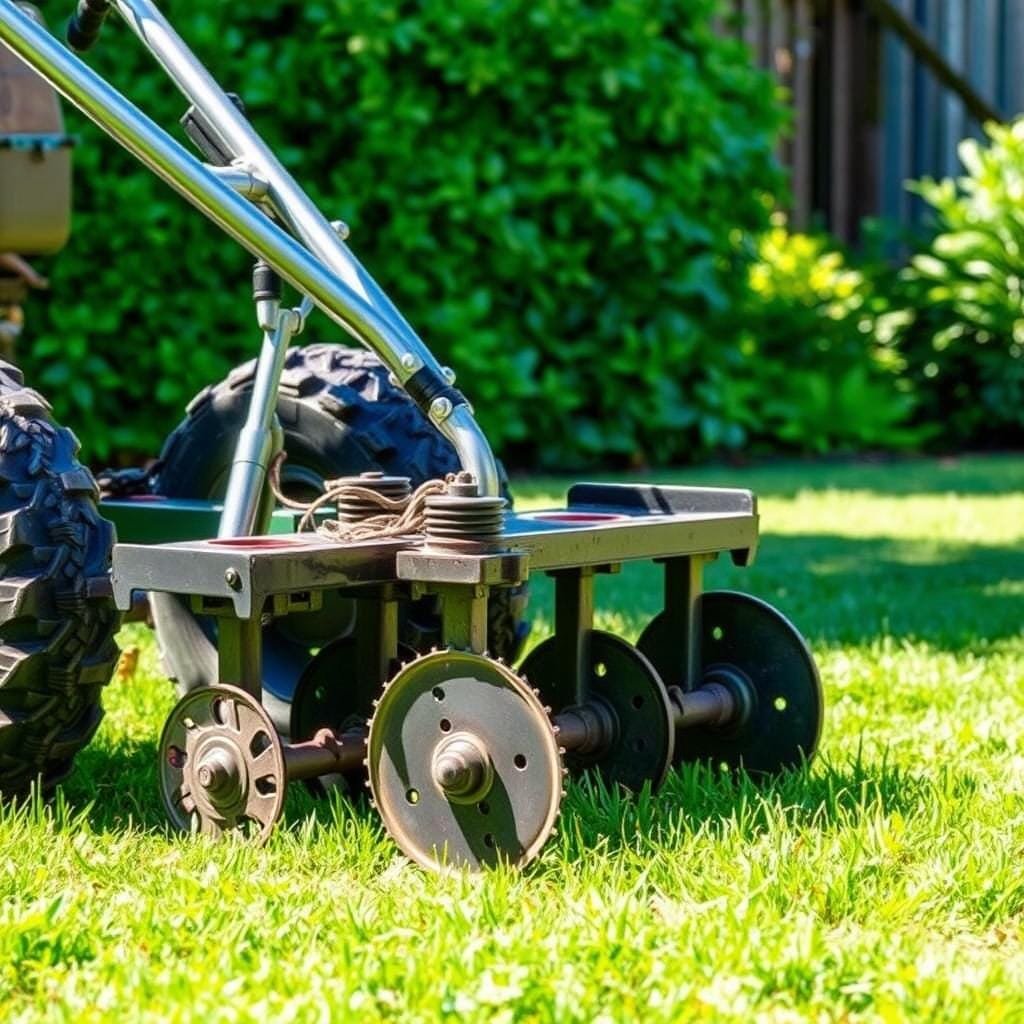
Lawn Scarification, Aeration and Overseeding: What Does Your Lawn Need?
Understand scarification, aeration and overseeding, the signs each lawn treatment addresses, suitable timing and essential aftercare.
Scarification, aeration and overseeding solve different lawn problems. They are often combined during renovation, but a responsible plan begins with the lawn’s condition rather than a standard package. Thatch, moss, compaction, poor drainage, shade, wear and weak grass each need a slightly different response.
Results also depend on weather, soil, seed-to-soil contact and aftercare. No treatment can guarantee a perfect lawn, particularly where shade, drought, waterlogging or heavy use remains unchanged.
What scarification does
Scarification removes accumulations of thatch, dead material and some moss from around the base of the grass. A modest thatch layer is normal, but excessive material can restrict water and air movement and make the surface feel spongy.
Signs that scarification may help include a dense layer of debris below the blades, persistent moss and water struggling to reach the soil. The operation can make a lawn look rough and open for a time. That is expected, which is why suitable growth and recovery conditions matter.
What aeration does
Aeration creates holes in the soil to improve movement of air and water around the roots and to relieve compaction. Solid tines make holes; hollow tines remove plugs of soil and are useful where compaction or heavy ground needs a stronger intervention.
Compaction often appears in routes across a lawn, play areas and ground used when wet. Grass may thin, surface water may linger and roots may remain shallow. Aeration is not a cure for every drainage problem: persistent waterlogging can point to soil structure, levels or drainage issues that need separate assessment.
What overseeding does
Overseeding introduces new grass seed into existing turf. It can improve density, repair thin areas and help a lawn recover after scarification. Seed choice should reflect use, shade and the intended finish. Fine ornamental mixtures, hard-wearing family-lawn mixtures and shade-tolerant blends behave differently.
Seed needs contact with prepared soil, moisture and suitable temperature. Simply throwing seed onto a compacted, thatchy surface is unlikely to give even establishment. Birds, dry weather and heavy foot traffic can also reduce success.
When treatments are combined
For a tired lawn with thatch, compaction and bare areas, a renovation sequence may include mowing, scarifying, aerating, top dressing and overseeding. Each step should support the next: debris is removed, the root zone is opened, surface levels are improved where appropriate, and seed gains better contact.
Not every lawn needs every step. A lightly compacted but otherwise dense lawn may only need aeration. A lawn with bare patches but little thatch might need surface preparation and targeted seeding. Severe moss will return if shade, wetness or weak grass is not addressed.
Best timing in the UK
Early autumn is often the most useful renovation window because soil retains warmth and moisture is usually more reliable. Spring can also work once grass is actively growing. Avoid renovation when ground is waterlogged, frozen, very dry or during extreme heat. Weather is more important than a fixed date.
RHS autumn-lawn guidance places scarifying and aerating in mild, damp early-autumn conditions, commonly September and October. Local weather in Surrey and Hampshire still needs to be checked before work begins.
Aftercare determines establishment
- Keep newly sown areas consistently moist without flooding them.
- Limit unnecessary foot traffic while seed germinates.
- Do not mow until the new grass is sufficiently established and tall enough for a light first cut.
- Use sharp mower blades and remove only a small proportion of the height.
- Follow a suitable feeding plan rather than applying high-nitrogen products indiscriminately.
- Expect thin areas to need review if shade, wear or drainage continues.
Our lawn care service in Farnham covers assessment, scarification, aeration, overseeding and related work where appropriate. For routine mowing within ongoing visits, see garden maintenance.
Diagnose before choosing treatment
Look at more than colour. Push a screwdriver or soil probe into several areas to compare compaction, inspect the thickness of thatch, and note where water collects. Check whether bare patches follow a route, sit beneath trees or coincide with pet use. A uniform treatment across the whole lawn can waste effort when only the high-traffic strip is compacted.
Moss is a symptom as well as a plant. Shade, wetness, low fertility, close mowing and weak grass can all contribute. Removing moss without changing the underlying conditions often gives a short-lived improvement. Likewise, overseeding a shaded lawn with an unsuitable fine mixture is unlikely to create durable cover.
Check for pests, disease and buried debris where deterioration is unusual. Some problems require specialist diagnosis; routine renovation should not be presented as a cure for every discoloured patch.
A simple recovery timeline
Immediately after renovation, the lawn may look open and untidy. During the first days, moisture is the priority. As seed germinates, traffic should remain light and the surface should not be allowed to swing repeatedly from saturated to completely dry. Germination will not be perfectly even because temperature, shade and moisture vary across a garden.
The first mow should be a light cut with sharp blades once new grass is established enough not to pull from the soil. Height can then be reduced gradually. Feeding and weed treatment must be compatible with new seed, so products should not be added simply because the lawn looks thin.
After six to twelve weeks, review density, drainage and wear. Local reseeding may be more sensible than repeating the entire process. Over the following year, mowing practice, soil condition and use will have as much influence as the renovation itself.
Frequently asked questions
Will scarification damage my lawn?
The lawn can look thinner immediately afterwards because unwanted material has been removed. Correct timing and aftercare support recovery; unsuitable or excessive work can cause unnecessary stress.
Should I overseed after aeration?
It can be useful where turf is thin, but it is not automatic. The seed mix, preparation, weather and ability to water should be considered first.
How quickly will I see results?
Germination and recovery vary with seed, soil temperature, moisture and care. A lawn develops over weeks and months, not in a single visit.
Arrange a lawn assessment
Request a garden visit so we can look at the lawn’s condition, use and site constraints before recommending work.

