Soft Landscaping vs Hard Landscaping: What Is the Difference?
Understand the difference between soft and hard landscaping, how the two work together and what to consider before planning garden work.
Soft landscaping covers the living and growing parts of a garden; hard landscaping covers constructed surfaces, edges and structures. Most successful gardens use both. A patio without planting can feel exposed, while a planting scheme without sound paths, levels or edges may be difficult to use and maintain.
What is soft landscaping?
Soft landscaping includes plants, soil preparation, turf and the work needed to establish them. It can involve new borders, shrubs, perennials, climbers, suitable small trees, hedge planting, lawn creation, seasonal colour and the restructuring of an existing bed.
- planting and replanting;
- bed and border creation;
- soil improvement where appropriate;
- turfing and lawn repair;
- hedge planting;
- mulching and establishment care;
- refreshing an established planting scheme.
The design must respond to light, soil, exposure, mature plant size and the maintenance the client wants. It also changes over time: plants grow, spread, flower, rest and sometimes fail. Aftercare is part of the project, not an optional extra.
What is hard landscaping?
Hard landscaping creates the physical framework. It can include patios, paths, steps, edging, sleeper beds, fencing, trellis and small garden structures. Repairs, preparation, drainage considerations and practical finishing are as important as the visible material.
- new patios and appropriate repairs;
- paths and defined routes;
- edging and sleeper beds;
- fence-panel replacement and trellis;
- suitable small walls or repairs within scope;
- surface preparation and associated pressure washing.
Hard landscaping does not mean that every structural, drainage, electrical or major building project falls within a general landscaper’s scope. Ground conditions, permissions, utilities, access and the loads involved must be assessed before work is agreed.
How the two work together
The hard layout establishes how people move, sit and maintain the garden. Soft landscaping settles that framework into the site, brings scale and changes through the seasons. Planning them together helps avoid common problems such as a path too narrow for practical access, a border too shallow for the proposed plants, or planting that blocks a route at mature size.
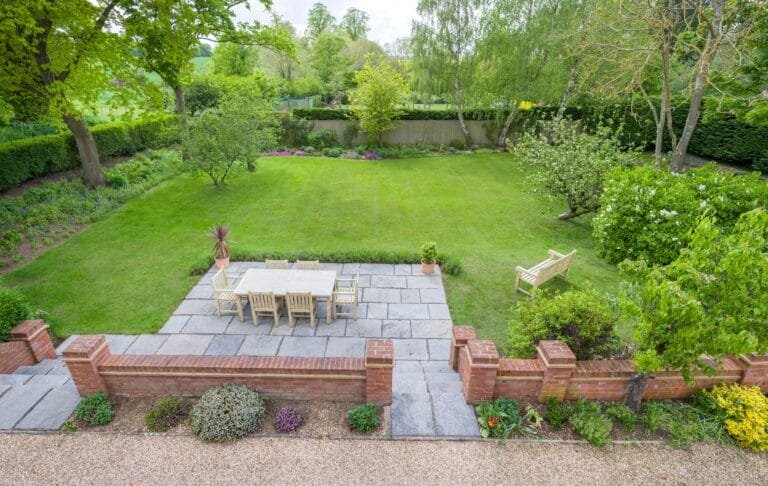
A simple example is a patio with a surrounding border. The patio level and drainage direction must be correct before planting begins. The border then needs enough soil depth, suitable plants and access for maintenance. Neither element should be designed in isolation.
Which work comes first?
Construction and disruptive ground work usually come before final planting and turfing. Existing plants that will be retained need protection, and access routes should be agreed so stored materials do not damage the rest of the garden. Soil improvement and planting follow once levels and boundaries are settled.
There are exceptions. Valuable plants may need lifting or relocating before machinery enters. A staged project may complete one garden zone at a time. The sequence should be written into the agreed scope rather than assumed.
Budget and long-term care
Materials, excavation, access and disposal often influence hard-landscaping cost. Soft-landscaping cost is affected by preparation, plant quantities, pot sizes, availability and aftercare. A balanced budget leaves enough for the planting and establishment that make the finished framework feel like a garden.
Maintenance should be discussed at design stage. A large lawn, clipped hedge, gravel area and densely planted border each create different ongoing work. Choosing an attractive layout that the household can realistically care for is better than over-designing the space.
Permissions, drainage and safety
Some work may require checks before construction. For example, GOV.UK guidance explains that permeable surfacing or drainage to a lawn or border can affect whether planning permission is needed for a front-garden hard surface. Boundaries, listed buildings, conservation areas and underground services can introduce other considerations. The relevant authority or specialist should be consulted when required.
Explore BHI Gardening’s soft landscaping and hard landscaping services. We assess the actual site and will not imply that specialist engineering or regulated work is included where it is not.
An example of integrated planning
Imagine a rear garden that needs a seating area, a route to the shed and more planting. The hard-landscaping plan first resolves patio size, levels, drainage and a path wide enough for practical access. Edging defines where soil and paving meet. The soft-landscaping plan then considers shade from the house, views from the doors and plants that will not obstruct the route at mature size.
If construction is completed without the planting plan, the remaining beds may be too narrow or filled with unsuitable excavated material. If planting is installed first, later machinery and deliveries may compact soil or damage roots. A combined drawing and sequence prevents these avoidable conflicts.
Choose materials and plants for the same garden
Material colour, unit size and laying pattern affect how planting is perceived. A highly varied paving surface may benefit from restrained planting; a simple terrace can support richer texture. The choice should also consider slip resistance, cleaning, weathering and whether repairs can be matched later.
Plants near paving must tolerate reflected heat, occasional foot traffic and the available soil volume. Thorny or strongly spreading plants may be unsuitable beside a narrow path. Trees and large shrubs need space for roots and crowns without compromising structures. These practical relationships are the point at which soft and hard landscaping become one design.
Clarify responsibility in the quotation
Where several trades are involved, establish who sets levels, handles drainage, protects retained plants, prepares topsoil and returns for planting. Confirm whether skips, permits, deliveries and aftercare are included. A well-defined boundary between tasks prevents gaps and duplicated cost.
Frequently asked questions
Is turfing soft landscaping?
Yes. Turf and lawn creation are living elements, although preparation and edging may interact with hard landscaping.
Are sleeper beds hard or soft landscaping?
The sleeper structure is hard landscaping; the soil preparation and planting within it are soft landscaping.
Can both be completed as one project?
Often, yes, when the scope is suitable. The quotation should separate materials, preparation, construction, planting and any exclusions clearly.
Discuss your garden project
Request a garden visit to discuss the existing space, priorities and practical sequence.