
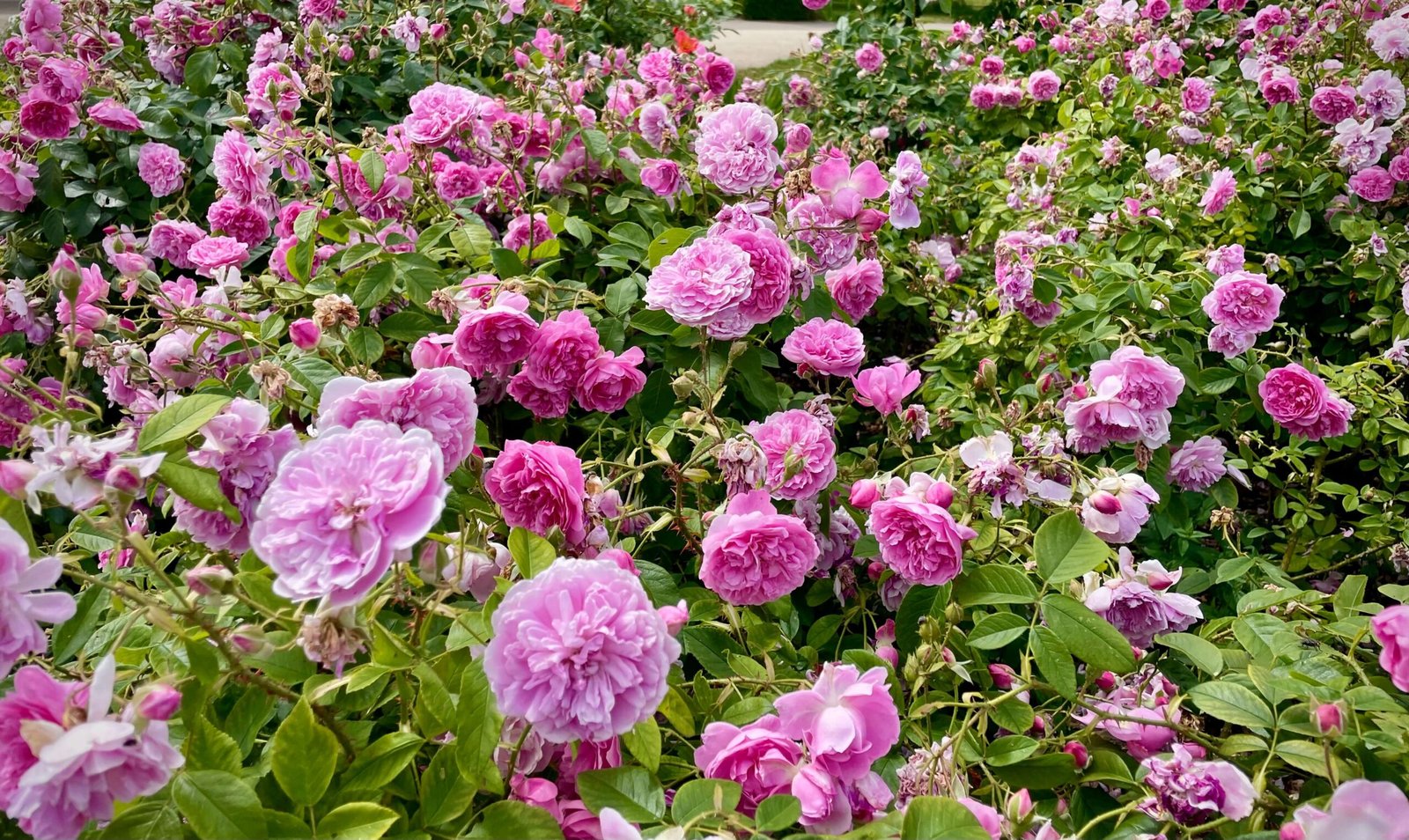
The Power of Roses: Ideas for Different Gardens
Discover how roses bring scent, colour and structure to cottage borders, formal gardens, courtyards and containers, with practical planting ideas and seasonal care.

A rose can change the character of a garden. Beside a front door it becomes a daily welcome; across a pergola it turns a route into a destination; among grasses and perennials it brings a softer, more romantic note. The most successful planting starts with the place and the way you use it, rather than with a flower colour alone.
This guide explores roses in cottage gardens, formal spaces, small courtyards, containers and wildlife-friendly borders, with ideas to borrow from well-known English gardens. For gardens around Farnham, Surrey and Hampshire, the aim is a planting scheme that feels at home, has room to mature and remains enjoyable to look after.
Start with the role of the rose
Before choosing a variety, decide what you want it to do. Is it the main event in a border, a scented companion to a seat, a screen along a boundary or a source of flowers for the house? A rose asked to do one clear job is easier to place than a collection bought without a plan.
- For a long display: look for a repeat-flowering variety and check its eventual height and spread.
- For a dramatic summer moment: a once-flowering old rose or rambler may be the right choice, provided other planting carries the garden afterwards.
- For scent: choose with your nose where possible; flower colour and fullness are no reliable guide to fragrance.
- For a restricted space: choose a naturally compact plant instead of relying on hard pruning to contain a vigorous one.
Most roses favour a sunny position with fertile soil that holds moisture without remaining waterlogged. Check the actual bed rather than assuming every Surrey or Hampshire garden has the same soil. A sunny terrace, a damp hollow and a dry wall border can all occur within one property.
Roses in cottage gardens and mixed borders
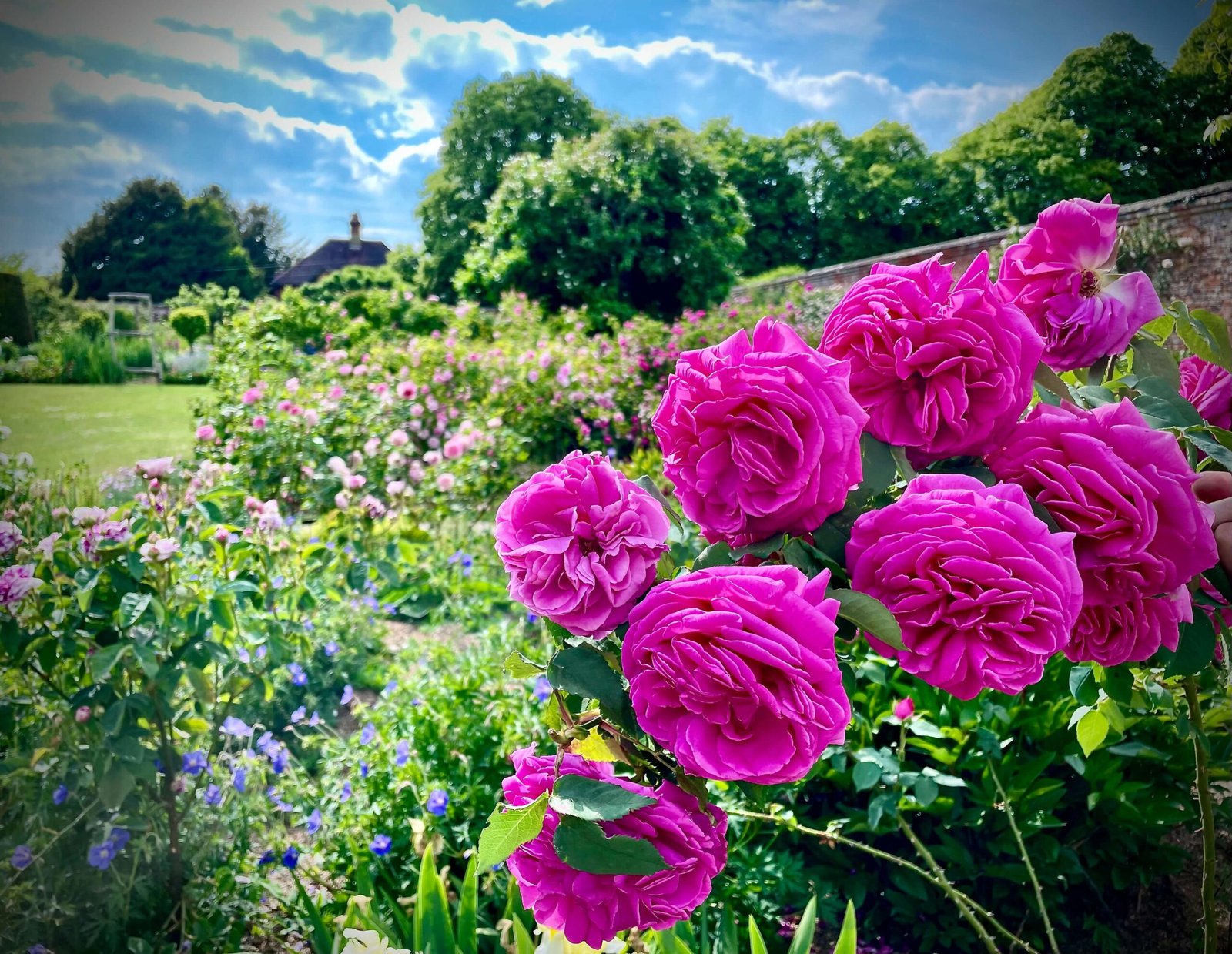
In a cottage-style garden, roses look most convincing as part of a community of plants. Let a shrub rose provide a repeating shape, then weave lower-growing perennials around it. The effect can feel relaxed while still having a clear structure.
Start with a restrained palette. Soft pink roses with violet flowers and green foliage create a quiet combination; apricot or yellow roses can give a warmer border more energy. Repeat one colour in several places so the eye travels through the bed instead of stopping at isolated specimens.
Hardy geraniums, catmint and suitable salvias are possible companions in sunny conditions. Check the requirements of each plant: a dry-loving edging plant should not dictate how a newly planted rose is watered. Leave enough open space around the rose for feeding, mulching and pruning, and avoid a dense tangle that hides its base.
Think beyond the flowering weeks. Bulbs can mark the beginning of the season, while later perennials and selected grasses keep the border interesting as rose flowers fade. Our guide to flower borders with year-round interest explores this wider sequence.
Roses in formal gardens and country-house settings
A formal rose garden relies on repetition and proportion. Matching beds, a simple path pattern or a repeated rose variety can create order without making the planting feel severe. The important decision is often the outline of the bed, not the number of different roses it contains.
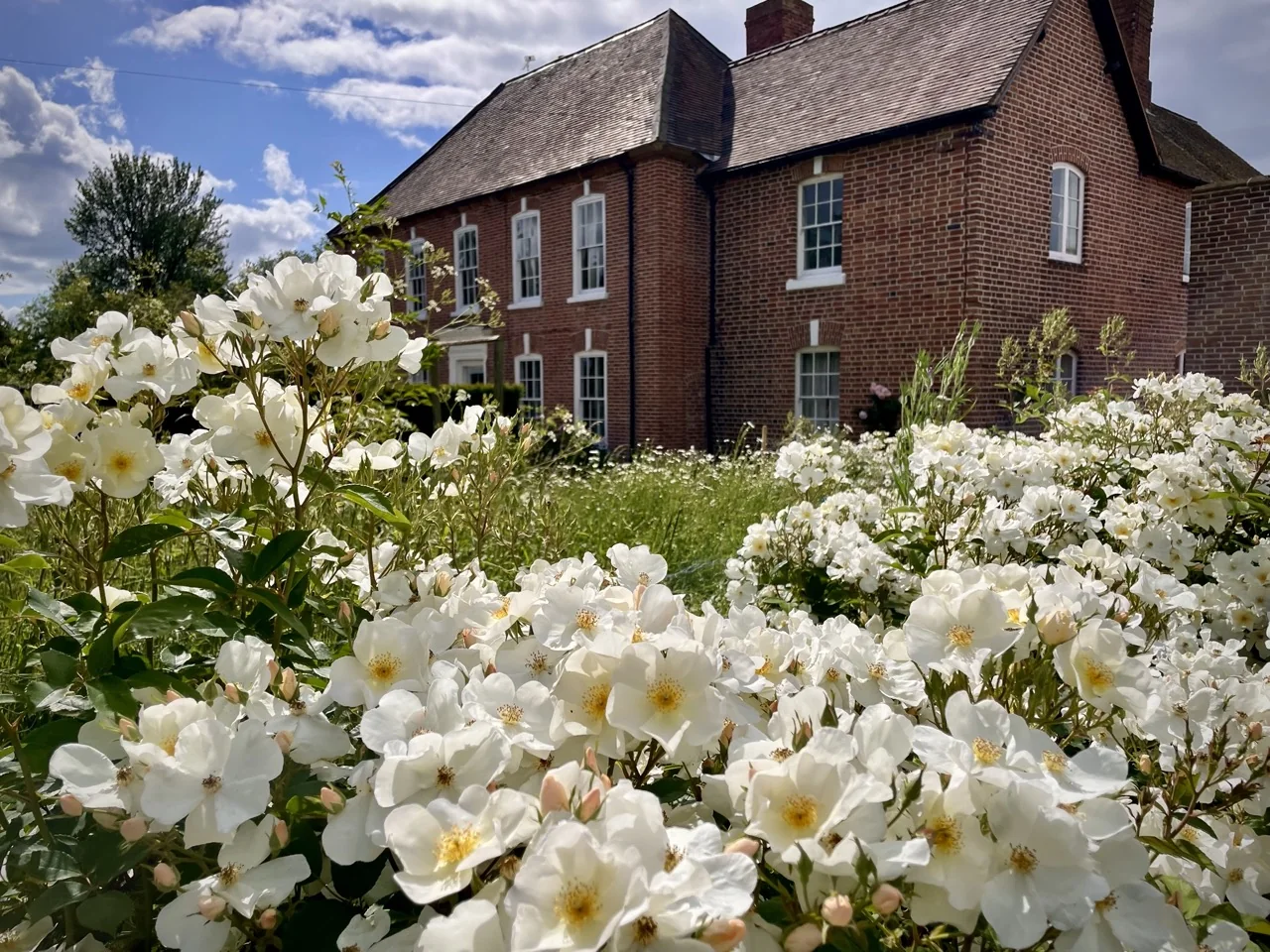
In a large setting, generous groups read more clearly from a distance than single plants scattered across a wide border. Near the house, a limited colour range can connect planting with brick, stone or painted joinery. White and pale flowers are useful for a calm composition; deeper colours can provide a deliberate focal point.
Allow for the less colourful months. A well-shaped boundary, an evergreen background or a seat at the end of an axis can hold the design together when roses are leafless. Keep any low edging accessible, and leave sufficient space between it and mature rose branches. A formal plan still needs practical access for maintenance.
Small gardens, front gardens and courtyards
In a small garden, one well-placed rose can be more effective than several competing plants. Consider the views from the kitchen, a favourite chair and the entrance. A compact shrub rose beside a sunny seating area gives you a close view of individual flowers, while a trained climber makes use of vertical space.
Plan for people as carefully as for plants. Keep thorny stems away from narrow paths, gates, letterboxes and children’s play routes. Leave room for doors to open and for someone carrying shopping to pass without brushing the plant. The width on the label matters just as much as the height.
Courtyards require a closer look at light. A bright-looking space can still be shaded by high walls for most of the day. Some varieties tolerate partial shade, but tolerance does not mean that every rose will flower well in a dark corner. If the position is unsuitable, use another plant there and put the rose where it can thrive.
Growing roses in pots and on terraces
Container roses bring flowers within reach where there is little planting space. Patio and miniature roses are natural starting points; some compact shrub roses also work in suitably large pots. Choose the rose and container together, allowing depth for the roots and stability against wind.
Use a container with drainage holes and a suitable peat-free compost intended for long-term planting. Pots dry out more quickly than garden soil, so check moisture regularly and water thoroughly when needed. Feed according to the rose fertiliser instructions rather than adding extra in the hope of faster growth.
Place the pot where you can reach it with a watering can and inspect the plant easily. On a terrace, a pair of matching containers can frame a view; on a balcony, confirm the space’s load limits and exposure before choosing large, heavy planters. A container is an ongoing commitment to watering, feeding and eventual repotting, not a maintenance-free shortcut.
Climbing roses on walls, arches and pergolas
Climbing roses bring flowers to eye level and above. They do not attach themselves to a wall, so install a strong support and tie the stems in as they grow. Keep the eventual weight of the plant in mind when choosing an arch or pergola.
Train suitable main stems towards the horizontal where the structure allows. This encourages flowering shoots along the framework instead of concentrating the display at the top. Leave space between the support and wall for air movement and access, and check ties so they do not cut into thickening stems.
A climber and a rambler are not interchangeable. Many climbers repeat flower and suit a controlled framework. Many ramblers make much larger plants and produce one main summer display, although repeat-flowering exceptions exist. A vigorous rambler can overwhelm a small arch, so check the variety’s mature dimensions before planting.
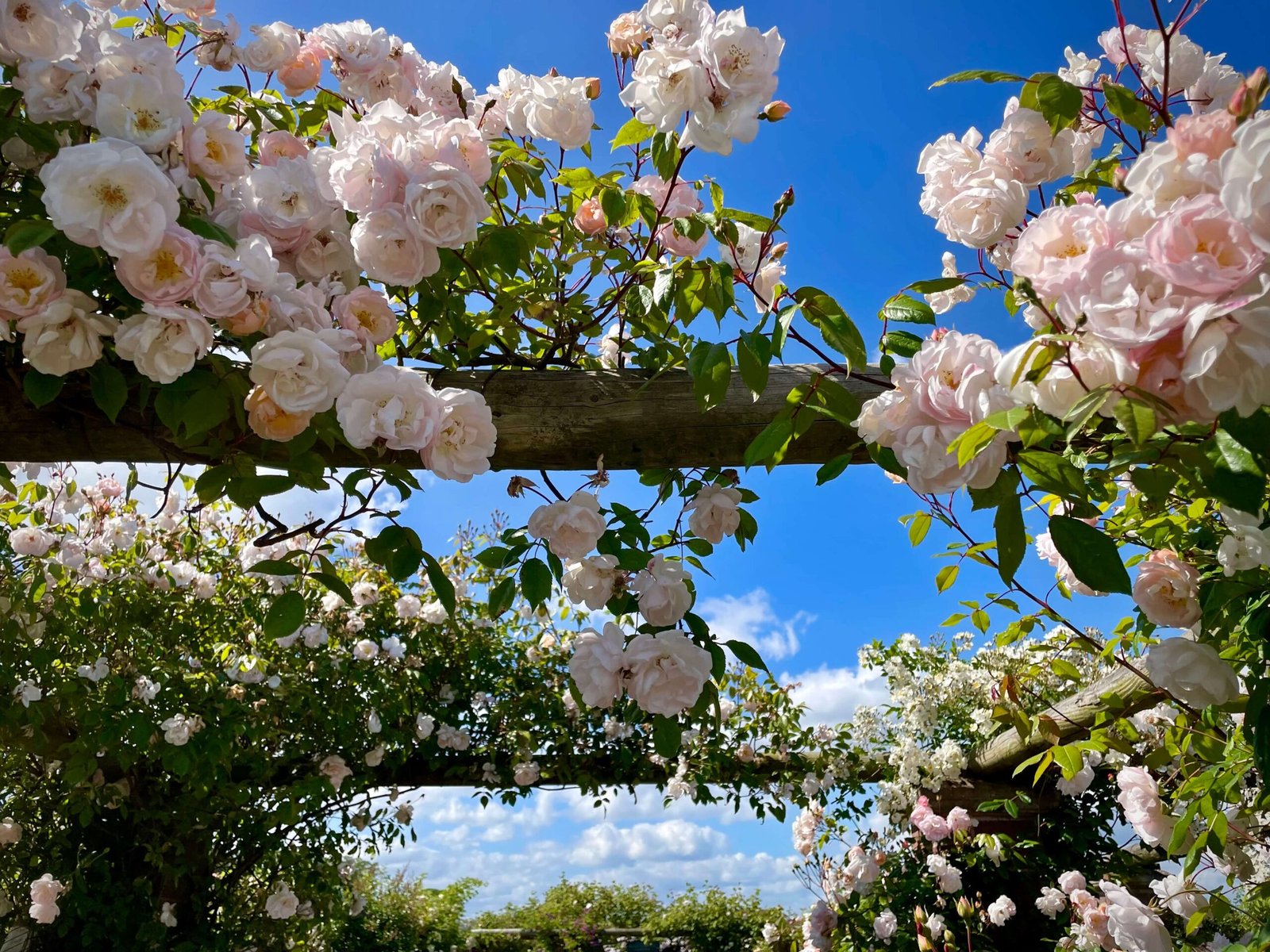
Wildlife-friendly gardens and informal boundaries
Roses can be part of a wildlife-minded garden as well as a decorative one. Open, single or semi-double flowers generally make pollen easier to reach than densely packed blooms. Where hips are a priority, choose a rose known for producing them and leave the relevant spent flowers in place.
An informal rose boundary looks very different from a clipped hedge. Give it enough depth and consider how arching stems will be managed beside paths or neighbouring land. Combine roses with a broader mix of flowering and structural plants so the garden offers interest beyond one flowering season.
Decide which parts of the garden you want to keep especially tidy and where a looser approach suits you. That distinction makes maintenance purposeful: deadheading by a front door and leaving hips in an informal border can both be sensible choices.
Rose gardens and places to find inspiration
Mottisfont, Hampshire: the beauty of a concentrated season
The National Trust’s rose garden at Mottisfont is known for its historic rose collection. Many of these old roses have one main flowering season. The design lesson is to celebrate that moment while considering what surrounds it: paths, walls, foliage and companion planting remain part of the experience before and after the flowers.
RHS Garden Wisley, Surrey: roses within a wider composition
Wisley’s Bowes-Lyon Rose Garden combines roses with other planting rather than treating every bed as an isolated collection. When exploring roses at the RHS gardens, notice the changes in height, repeated colours and plants that carry interest between flowering peaks. These are ideas you can adapt to a modest border.
David Austin’s gardens, Shropshire: compare character and scale
The David Austin gardens at Albrighton offer another way to study roses in different garden settings. Look beyond a favourite flower: compare the whole shrub, the relationship to neighbouring plants and how close you need to be to appreciate its fragrance. Check official visitor information before travelling; flowering varies with weather and season.
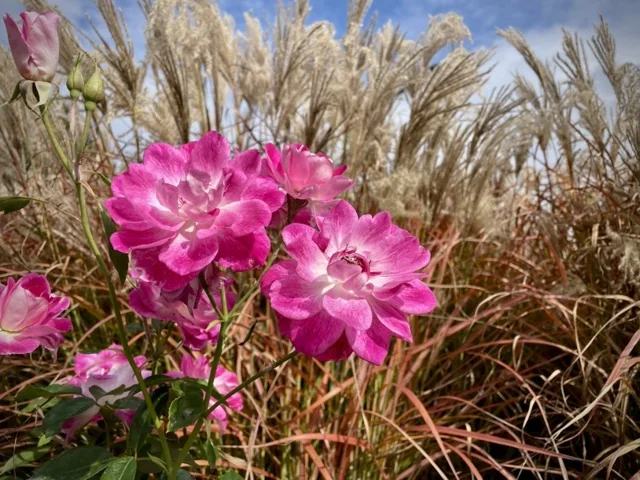
The photographs in this article are selected from the BHI Gardening Media Library as planting illustrations. They are not identified here as photographs of the visitor gardens described above.
Planting and caring for roses through the year
Prepare the whole planting area, not only a small hole. Remove persistent weeds, assess drainage and make room for the mature plant. Bare-root roses are normally planted during dormancy, while container-grown plants offer a longer planting window. Avoid planting into frozen or waterlogged soil, and follow the nursery’s instructions for the particular rose.
- Spring: check growth, feed as appropriate and mulch moist soil while keeping material clear of stems. Inspect supports before new growth becomes difficult to reach.
- Summer: water establishing plants during dry weather, direct water to the soil and deadhead repeat-flowering roses where more blooms are the aim. Leave flowers that you want to develop into hips.
- Autumn: review plants that have outgrown their place, collect diseased fallen leaves and plan changes while the season is fresh in your mind. Secure loose stems before winter winds.
- Winter: check structures and prune according to the rose group. Many climbers are pruned in winter; once-flowering ramblers are usually pruned after flowering. Do not apply one pruning recipe to every rose.
For black spot and other recurring problems, start with correct identification, healthy growing conditions and good hygiene. Disease-resistant varieties, sensible spacing and removal of affected fallen leaves can reduce pressure. Aphids or a few marked leaves do not automatically justify spraying; inspect the plant and the wider garden before deciding on treatment.
Questions gardeners often ask
Can I grow roses in a small garden?
Yes, if the variety fits the space at maturity. Choose a compact shrub or patio rose, or a manageable climber with an appropriate support. Keep access clear and resist buying a large rambler for a narrow boundary simply because the young plant looks small.
Will roses flower all summer?
Some repeat in flushes, while others have one main display. Check the variety description rather than relying on the word “rose”. Light, weather, water and plant health also influence flowering, so repeat-flowering does not mean an uninterrupted carpet of blooms.
Which roses are easiest to maintain?
The easiest rose is one suited to its site, mature size and the care you can provide. Prioritise health and disease resistance as well as colour. A vigorous climber needing regular tying-in may be enjoyable for one gardener and impractical for another.
Can I plant a new rose where an old one grew?
Take advice before reusing exactly the same spot. Roses can suffer from replant problems, and the right preparation depends on the history and condition of the soil. Moving the planting position or improving the wider scheme may be more useful than repeatedly replacing a struggling plant.
Bring roses into your own garden
Begin with three decisions: the place, the purpose and the mature size. Then choose colour, fragrance and companions. This order helps a rose become part of the garden instead of another plant that needs rescuing or constant restraint.
BHI Gardening can help with planting and border improvements and ongoing garden maintenance. Read our planting scheme guide for Surrey and Hampshire or request a garden visit to discuss your space.