How to Create Flower Borders with Year-Round Interest
Plan flower borders with structure, seasonal succession, texture and realistic maintenance for year-round interest in a UK garden.
A border with year-round interest does not need to flower every day of the year. It needs enough structure, foliage, texture, seasonal succession and well-timed highlights that the area still feels considered when one display finishes. The strongest borders are planned from the site outward: light, soil, moisture, exposure and available maintenance come before colour.
Begin with the conditions
Observe where sun falls in summer and winter, where rain drains or collects, and how exposed the border is. Test soil texture and pH when plant choice depends on it. A label saying “full sun” or “moist but well drained” is meaningful only when compared with the actual bed.
Surrey and Hampshire gardens are not all alike. One Farnham border may sit on free-draining soil in full sun, while another nearby remains shaded and damp. A local planting scheme should respond to the individual garden rather than rely on a county-wide recipe.
Build a structural framework
Start with plants that hold the composition together. Shrubs, compact evergreens, grasses and strong perennial forms can provide height, mass and winter presence. Structure does not have to mean a line of identical clipped plants; it can be a repeated rhythm of forms that leads the eye through the bed.
Check mature size before planting. A shrub that eventually reaches two metres cannot be treated as a small gap filler. Allowing realistic space reduces crowding, repeated pruning and the need to remove plants later.
Plan seasonal succession
List what will carry the border in each part of the year. Spring bulbs and emerging foliage may start the sequence; early perennials and flowering shrubs can bridge into summer; later perennials, grasses, seed heads and leaf colour can extend autumn. Winter interest may come from evergreen leaves, bark, stems, silhouettes and retained seed heads.
- Spring: bulbs, fresh foliage and early-flowering shrubs.
- Early summer: roses, hardy geraniums, nepeta and upright salvias where conditions suit.
- Late summer: longer-flowering perennials, hydrangeas, grasses and repeat-flowering plants.
- Autumn: grasses, sedums, asters, berries and foliage colour.
- Winter: evergreen structure, bark, stems, seed heads and clipped or natural forms.
These are design roles rather than a universal shopping list. The specific plants must suit the bed.
Use repetition and restraint
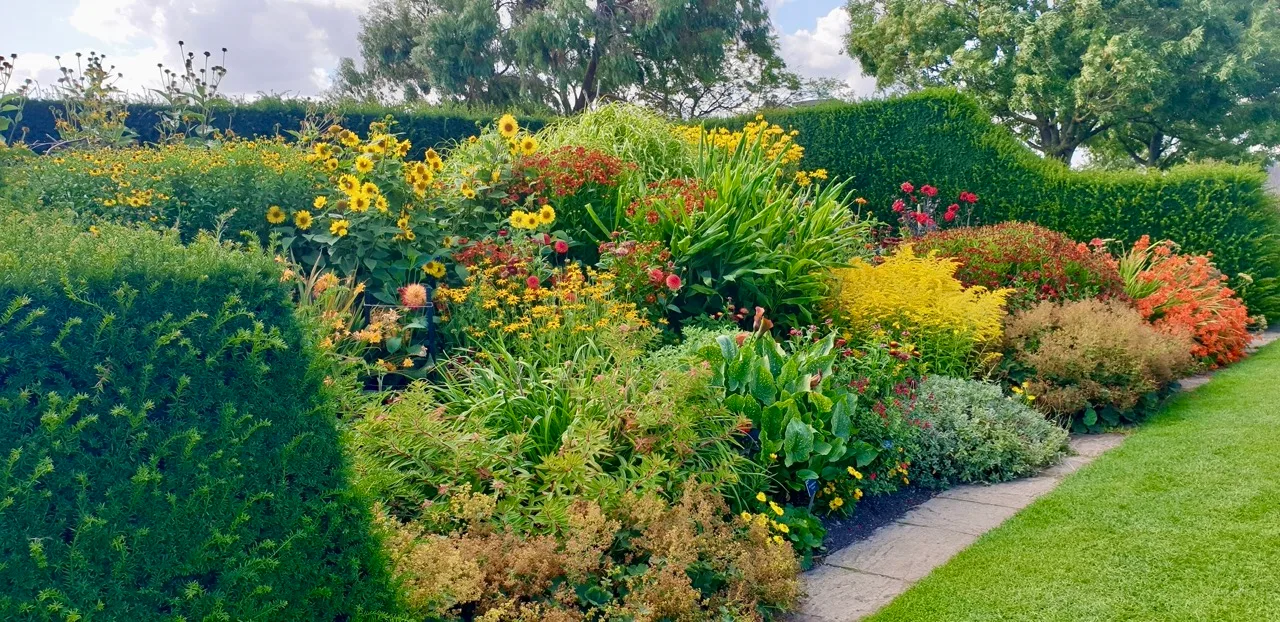
A border made from one of everything can feel fragmented. Repeating a limited palette creates rhythm and makes individual highlights more effective. Repetition can involve the same plant, a related colour, a leaf shape or an upright form appearing at intervals.
Colour works best when it supports the garden rather than dominates it. Decide whether the scheme will be calm, high contrast, warm, cool or seasonally changing. Foliage should be considered with the same care as flowers because it occupies the border for longer.
Layer height, texture and habit
A simple front-middle-back arrangement can be useful, but natural plants do not always follow it. Some low plants need space to spread; transparent tall perennials can sit nearer the front; climbers may add height without taking much ground. Combine rounded, upright, arching and fine-textured forms so the border remains interesting after flowers fade.
Design for the maintenance available
Year-round interest should not create year-round pressure. Be honest about watering, staking, dividing, deadheading and cutting back. A densely packed cottage-style border needs a different level of attention from a scheme based on shrubs, grasses and ground cover.
Mulching and careful plant spacing can reduce some weeding, but no living border is maintenance free. Leaving selected stems through winter can provide structure and habitat; they can be cut back at an appropriate point before new growth advances.
Planting and aftercare
Prepare the soil according to its condition, remove persistent weeds and water plants thoroughly after planting. Avoid burying crowns or planting woody plants too deeply. New planting needs consistent aftercare through establishment, especially during dry weather. Losses are more likely when a beautiful plan is installed without a realistic watering arrangement.
BHI Gardening can help with soft landscaping and planting in Farnham, from refreshing an established bed to creating a new scheme. For continued bed care, see garden maintenance.
Audit an existing border before buying plants
Photograph the bed in each season and list what already performs well. Healthy mature shrubs may provide valuable structure even if the spaces around them feel tired. Identify plants that are in the wrong position, repeated weeds, empty periods and areas hidden from the main viewpoint. Measure the bed; visual guesses usually underestimate how many plants are needed or how large they will become.
Decide whether the border needs editing, dividing, soil improvement or a full replant. Lifting everything can destroy maturity that took years to develop. Equally, inserting more plants into a bed already crowded with roots may not solve the problem.
Allow for wildlife without losing the design
A long flowering sequence can support pollinators, while berries, seed heads and shelter extend value later in the year. This does not require a border to look neglected. Defined edges, repeated forms and selective winter cutting can provide visual order while leaving useful habitat in appropriate areas.
Avoid relying on a single “wildlife” label. Double flowers may offer less accessible pollen, some berries require pollination partners, and plants advertised for insects still need suitable conditions. Diversity of flower shape and season is more useful than a token plant.
Think in groups, not isolated specimens
Set out repeated groups while plants are still in pots and view them from the house, path and seating area. Staggering plants usually looks more natural than rigid rows, but deliberate lines can suit a formal design. Leave temporary gaps for bulbs or annual colour only where there is a plan to maintain them; otherwise empty soil quickly becomes a weed opportunity.
Frequently asked questions
How many different plants should a border contain?
There is no fixed number. A smaller range repeated well often feels more coherent and is easier to maintain than many isolated specimens.
Can a shady border have year-round interest?
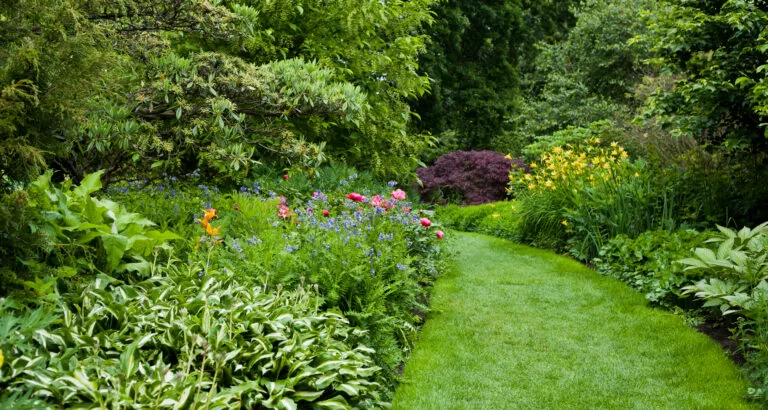
Yes. Shade-tolerant shrubs, ferns, bulbs, foliage plants and suitable ground cover can create a layered scheme when matched to soil and moisture.
When is the best time to plant?
Spring and autumn are often useful, but plant type, soil condition and weather matter. Avoid planting into frozen, waterlogged or severely dry ground.
Plan your border
If you would like help turning the site conditions and your preferences into a practical scheme, request a garden visit.