How to Plan a Planting Scheme for a Surrey or Hampshire Garden
A practical guide to planning a planting scheme around Farnham, from aspect and soil to mature size, seasonal interest and maintenance.
A useful planting scheme begins with the garden’s conditions and the people who will care for it. Colour preferences matter, but aspect, soil, exposure, drainage, mature plant size and maintenance determine whether the scheme will still work after the first season.
Surrey and Hampshire contain many different soils and microclimates. Even neighbouring gardens can vary because of building shade, mature trees, slopes and past construction. Local context is helpful; a site assessment is more important.
Write a clear brief
Describe how the garden should feel and function. Is the priority year-round structure, summer colour, privacy, pollinator value, a view from the kitchen or a border that can tolerate children and pets nearby? Note colours and plants you enjoy, but also record anything you do not want.
Define the level of maintenance honestly. A richly planted border may involve staking, deadheading, dividing and seasonal cutting back. A shrub-led scheme may be calmer to manage but still needs formative pruning, mulching and monitoring.
Map light, shelter and moisture
Observe the garden more than once. A wall that is sunny in midsummer may cast long winter shade. Wind can dry one corner while another remains still and damp. Roof overhangs, tree roots and fences all change moisture. Mark full sun, partial shade, deep shade, exposed positions and frost pockets on a simple plan.
Understand the soil
Check texture, drainage and compaction. A simple pH test helps where acid- or lime-sensitive plants are being considered. Do not assume that adding large quantities of one material will transform unsuitable ground permanently. Improvement should respond to the actual soil and avoid damaging its structure.
New-build gardens may contain compacted layers or construction debris, while established beds may have been improved over many years. Digging small inspection holes in several locations can reveal more than judging the surface alone.
Choose the framework first
Place the plants that provide height, screening and long-term structure before filling gaps with seasonal interest. Consider sight lines from windows, boundaries, access and the eventual spread of shrubs or small trees. Check whether roots, overhang or shade could affect neighbours or buildings at mature size.
Evergreen structure can be valuable, but a scheme made entirely from evergreen domes can feel static. Deciduous shrubs, grasses, perennials, bulbs and climbers bring change and texture. The balance should suit the garden rather than follow a formula.
Plan colour, texture and seasonal succession
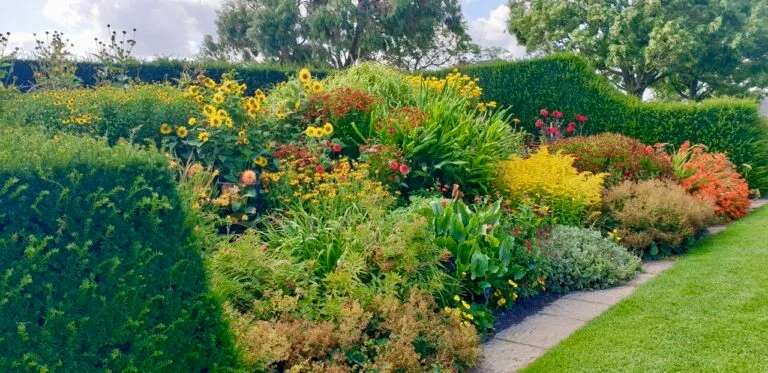
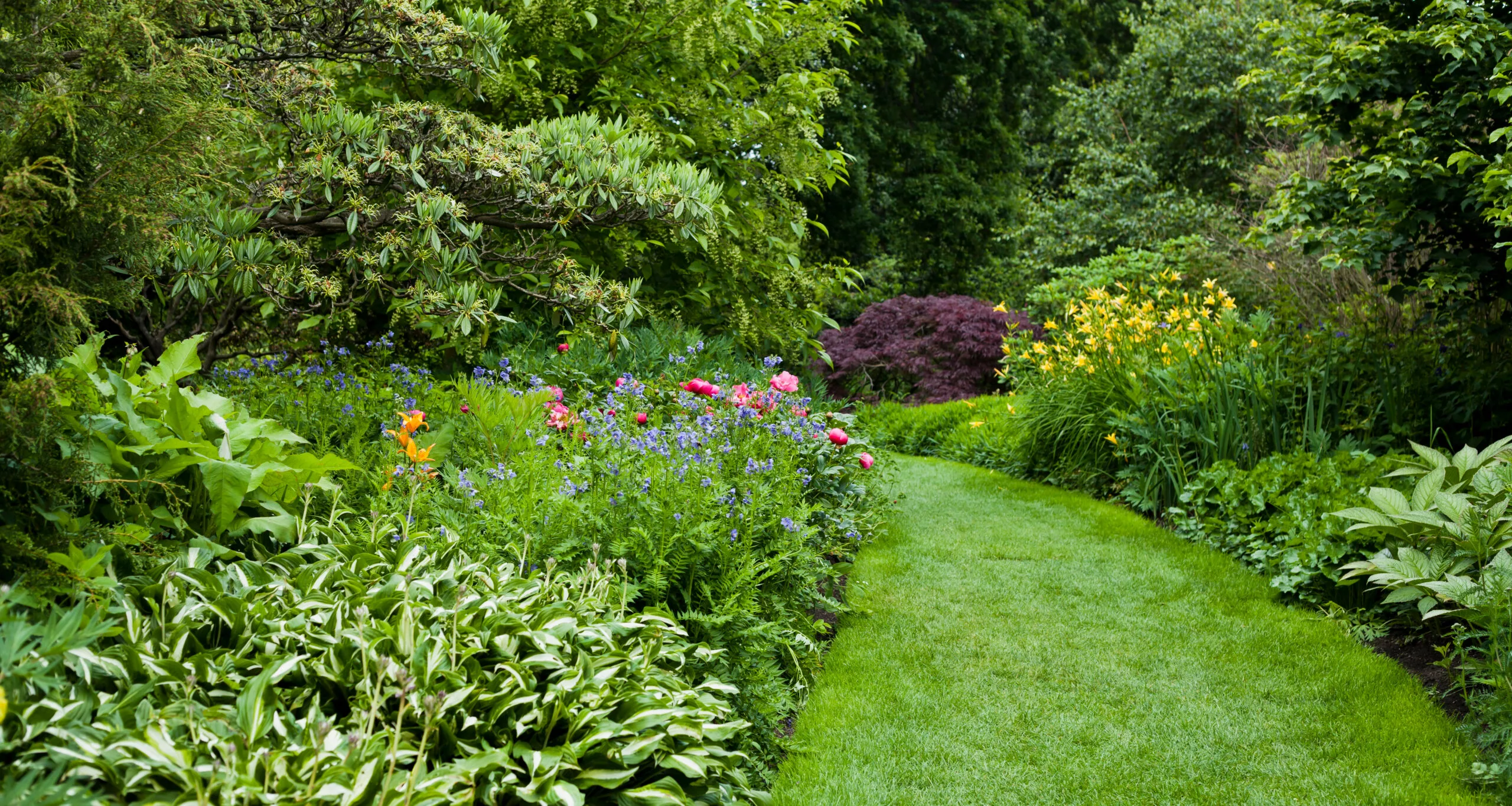
Create a month-by-month outline. Identify when the garden already has a strong display and where the quiet periods occur. Repeat key plants or visual characteristics so the border reads as one scheme. Contrast broad and fine foliage, upright and rounded shapes, or matt and glossy leaves.
- Use a limited core palette and repeat it.
- Include foliage that works beyond flowering time.
- Choose plants with more than one season of value where space is limited.
- Allow room for mature spread.
- Keep access for pruning, watering and weeding.
- Consider winter silhouettes, bark and seed heads.
Source plants carefully
Availability varies, and substitutions should be based on function and site suitability rather than flower colour alone. Compare mature size, habit, hardiness and care. Larger pots create faster initial impact but increase cost and do not remove the need for establishment watering.
Check plant health and labels on delivery. Where several plants form a repeated group, consistent size and habit help. Any substitution should be agreed before planting when it changes the intended effect.
Prepare, plant and establish
Clear persistent weeds, prepare the soil appropriately and set out plants in their pots before digging. Check spacing from more than one viewpoint. Plant at the correct depth, water thoroughly and mulch where suitable without burying crowns or stems.
Agree who will water and monitor the scheme through the first growing seasons. Weather, soil and plant type determine need; an automatic schedule should still be checked against actual moisture.
Our soft landscaping service includes planting schemes, border creation and the refresh of established beds where the scope is suitable. Ongoing care can be arranged through garden maintenance.
Turn the brief into a plan
Draw the bed to scale, even if the drawing is simple. Mark windows, doors, paths, drains, existing trees and the direction of north. Add the mature spread of framework plants as circles rather than drawing only their current pot size. This quickly exposes overcrowding and sight-line problems.
Create a plant schedule with quantity, final size, role, flowering period and preferred conditions. A plant can play more than one role: a shrub may screen a boundary, provide evergreen mass and carry flowers. If several plants perform the same essential function, the scheme is less vulnerable when one variety is unavailable.
Test the scheme against real life
Walk through an ordinary year. Who waters during a holiday? Can a mower reach the lawn? Will fallen petals or fruit create a problem beside paving? Is there room to prune behind a shrub? Can the client see the main display from the room they use most? These questions often improve a plan more than adding another variety.
Consider pets and children without automatically removing all interesting planting. Avoid known hazards in high-contact areas, protect delicate new plants and retain usable play or circulation space. The right response depends on how the garden is actually used.
Phase planting without losing coherence
If the whole scheme cannot be installed at once, prioritise soil work and the structural plants. Record the full plan so later additions follow the intended palette and spacing. Temporary annuals or mulch can cover open ground, but avoid filling every gap with permanent impulse purchases that conflict with the next phase.
Frequently asked questions
Do I need a soil test?
A basic pH and texture check is useful when selecting a new scheme. More detailed analysis can help where growth has been poor or soil conditions are uncertain.
Should I buy the largest plants available?
Not automatically. Larger plants cost more, can be harder to handle and still require establishment care. A mix of sizes can create structure while using the budget carefully.
Can an existing border be redesigned without clearing everything?
Often, yes. Healthy, well-placed plants can be retained while gaps, repetition and structure are improved.
Plan your planting
Request a garden visit to discuss the site, preferred style and realistic care.